When you click on links to various merchants on this site and make a purchase, this can result in this site earning a commission. Affiliate programs and affiliations include, but are not limited to, the eBay Partner Network.
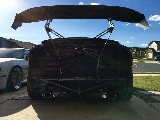
A couple of hard pulls and she died. Was stuck on the side of the road for a while. Flatbed truck ruined my splitter... Figured out it was my fuel pump line. The fuse melted! Traced it back, not grounded anywhere? Wired in a new inline fuse but it's still getting very hot to the touch.
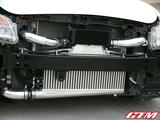
Test fitting the IPL front and working on a V2 splitter may add some canards too.
Thinking that the wiring is getting hot as it is 10awg all the way to the pump then 12awg for the inline fuse. It's hot on the fuse and right where the wiring connects. Maybe too much restriction from the 10awg to the 12awg?
Thinking about doing a battery relocation soon too. Also, full A/C and Heater delete. We shall see.
Oh yeah, put in the Z1 master brake cylinder brace too. What a pain in the a$$, still need to test it. Gotta firm mount the external reservoirs for the front coils too have them set up with drift engineering (zip ties).
Wow! That fuse holder is toast. It's possible that the fuse wasn't seated properly and the connections were arcing causing it to melt. That said, I wouldn't recommend using anything smaller than 10 gauge for a 30 amp draw/fuse and I'd probably be inclined to use 8 gauge for that long of a run. 12 gauge is better suited for a 20 amp fuse, not 30 amps. Here s handy little chart listing recommended wire sizes for some standard fuse ratings.
For higher draw accessories I also prefer to use ANL or ANS Type Auto fuses to standard ATC Type medium or mini blade fuses. Or at the very least use the larger Maxi Type blade fuses.
Wow... That fuse chart didn't post up well at all. Here are a couple of other handy charts for determining wire size based on current draw and/or fuse size.
For higher draw accessories I also prefer to use ANL or ANS Type Auto fuses to standard ATC Type medium or mini blade fuses. Or at the very least use the larger Maxi Type blade fuses.
Thanks! I've been digging into the issue in the garage. Tracing wires feeling heat. There is still a significant amount of heat in the wire directly to the left of the fuse (where it is crimped) and on the fuse itself. I think it is due to the 10awg going to the 12awg fuse holder. I'm looking at the ANL fuses now and may wire one of those in instead.
No problem. Sounds like you are on the right path now. Just pick up an ANL fuse & fuse holder and bring your 10 AWG wire directly that and run a short section of 10 AWG wire from the other side of the fuse holder to the battery. This should reduce the resistance through the fuse holder which should cut down on the heat you are feeling there.
No problem. Sounds like you are on the right path now. Just pick up an ANL fuse & fuse holder and bring your 10 AWG wire directly that and run a short section of 10 AWG wire from the other side of the fuse holder to the battery. This should reduce the resistance through the fuse holder which should cut down on the heat you are feeling there.
Ordered some items to put in the 30 amp ANL fuse with the 10 AWG wire. Gonna play around with it this weekend hopefully to get it where I feel comfortable beating on it again. Also, window shopping some for the V2 splitter. Thanks again for the info/tips/tricks on the electric situation (I am no electrician haha)
No problem. Good luck with it. I'm not an electrician either but I did install car stereos for a few years back between high school and college so that was a good learning experience.
Wired in the ANL fuse it took some of the heat off the fuse block but it still gets hot. Gonna replace the relays as they're getting pretty toasty too. Maybe it's just crappy relays?
Worth a shot, but I wouldn't expect the relay to cause the wire or fuse holder to hot. Have you checked your current draw on that circuit with a multi-meter by any chance?