


Custom Grounding Kit


Thread Starter
Registered Member
Joined: Jan 2015
Posts: 620
Likes: 82
From: California, USA
Had to bend the brackets a bit more. I think the blocks will stay pretty much as they are. Just gotta clean the buffing bar remnants out of the threads. I'll have to sand and rebuff the bends on the brackets, but really minor. I did a test fit and they look good.
Thread Starter
Registered Member
Joined: Jan 2015
Posts: 620
Likes: 82
From: California, USA
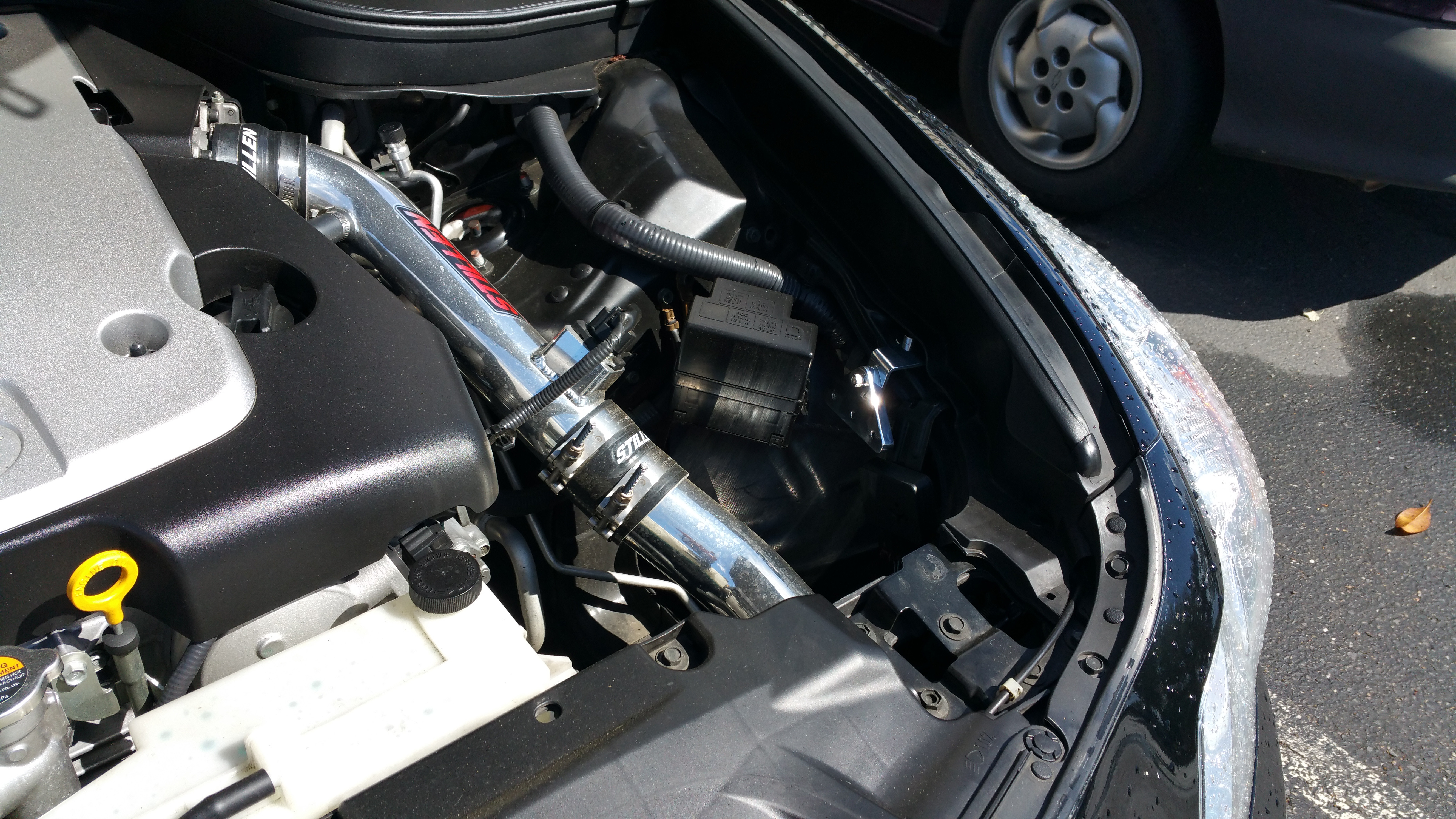
Checking fit. Yes, the engine compartment needs a bit of TLC. The Gen 3s need a polish badly! This is what the grounding blocks will look like in the car. Still the wait for the rest of my materials. Sooooon.



Thread Starter
Registered Member
Joined: Jan 2015
Posts: 620
Likes: 82
From: California, USA
TL-DR - There is no big effective difference between what I am doing and a standard grounding kit.
Thread Starter
Registered Member
Joined: Jan 2015
Posts: 620
Likes: 82
From: California, USA
Oh, almost done with the wiring. Been doing what I can during lunch at work since I do all the cooking at home (unless I want to eat mac-n-cheese every day). Will have pics soon.
I am sure there is a way to calculate actual conductivity, but you would have to take into account a lot of factors to get it accurate. I don't think it is necessary for what we are doing. If you using a good quality grounding kit, it will be as good as what I am doing or possibly better. Copper is more conductive than aluminum. That being said, the steel in the car body is the lowest common denominator with the least amount of conductivity out of the entire grounding circuit. It also, by the way, makes up the largest portion of the grounding. But what the kit does is bypass much of this with respects to the engine, transmission, and throttle bodies, and also strengthens the ground to the body by providing a better path to the battery. Even with using the aluminum block, the difference in conductivity (as long as you are using 8 awg or better) will be negligible. I am using the aluminum blocks for looks, though the function of using them makes little difference with regards to kit in general as opposed to using a standard grounding kit.
TL-DR - There is no big effective difference between what I am doing and a standard grounding kit.
TL-DR - There is no big effective difference between what I am doing and a standard grounding kit.


Thread
Thread Starter
Forum
Replies
Last Post