


Painted Caliper Project

Thread Starter


Joined: Nov 2010
Posts: 19,846
Likes: 5,143
From: Rochester, NY
So I called Z1, and they finally explained the $12 kit was for one rear-only, and mistakenly didn't describe the kit on their site as front or rear. Also, their photo was mistakenly showing the kit for a front caliper, which they don't actually sell bare bones like the rear. The only way to get the front kit is to buy the much more expensive package which includes lube. How more expensive? Well fronts and rears, sold with little lube packets, would be $157 plus shipping.
The little packets of lube... it looks like brake lube and brake fluid, one packet each per piston. WTF? Just buy a tube of brake lube.
You know, I've got a lot of Z1 products on my car, and overall I'm happy to have Z1 as an available resource for this platform... but man, this is really dumb.

The little packets of lube... it looks like brake lube and brake fluid, one packet each per piston. WTF? Just buy a tube of brake lube.
You know, I've got a lot of Z1 products on my car, and overall I'm happy to have Z1 as an available resource for this platform... but man, this is really dumb.
Last edited by Rochester; Mar 12, 2024 at 04:13 PM.
Thread Starter
Joined: Nov 2010
Posts: 19,846
Likes: 5,143
From: Rochester, NY
Today I have all the various parts thoroughly cleaned and organized and set aside. Bunch of little bags in a bigger bag, one per corner. Pistons, seals, dust boots, retainer wires, pins, cotter pins, spring plates, bolts and bleeder valves. Kind of overkill, but whatever. It's organized.
With a little hindsight, I'm feeling like I learned a lot about these brakes.
Next up is to blast the heck out of the 8 caliper halves, for no real reason except to better assess what I have, and hand them off the the PC shop without being covered in grease and grime.
With a little hindsight, I'm feeling like I learned a lot about these brakes.
Next up is to blast the heck out of the 8 caliper halves, for no real reason except to better assess what I have, and hand them off the the PC shop without being covered in grease and grime.
Last edited by Rochester; Mar 12, 2024 at 05:07 PM.


there's a high-temp purple stuff I used on racecars, and continue to use on everything else.
Available at the parts stores too. Whether it's OK for internal seals you'd have to check - I just lubed stuff up with clean brake fluid for the Mazda calipers. Of course back then I could get ATE super blue fluid before the NTSA got snarky about fluid color. I think ATE Type 200 is still available, or Motul RBF600, or Ford Heavy Duty DOT 4.

Available at the parts stores too. Whether it's OK for internal seals you'd have to check - I just lubed stuff up with clean brake fluid for the Mazda calipers. Of course back then I could get ATE super blue fluid before the NTSA got snarky about fluid color. I think ATE Type 200 is still available, or Motul RBF600, or Ford Heavy Duty DOT 4.

Moderador


Joined: Jun 2019
Posts: 2,626
Likes: 765
From: South Florida
I would seriously suggest an Iron remover for the pesky embedded dirt that doesnt want to come off. This iron remover is a God-sent for anything rubber that you dont want to damage with harsh scrubbing. I also use Dawn Power Wash spray for dishes for any grease/oil/dirt/stains in the car and it does a beautiful job to clean as it does to dishes. It's the only type of cleaner that will disolve oil/grease and leave you with just dry dirt that just falls off. If you've ever used it for plastic dishes you'll notice that it leaves the plastics back to original look.
I used this on the wife's Rav4 when an axle boot came off. I simply cleaned the entire boot with this and it left it in a beautiful/original finish to the point that the boot actually sealed with the CV cup without serious brake clean/degreaser help.
For the pins, place them on a flat edge surface and roll them to confirm they are straight, they can bend over time but look straight. If any of them are bent it might not let the pad sit in the right location. As far as the grease goes cover everything except the lip of the boots where they meet the caliper body and the inside chamber that sees brake fluid. Any grease will contaminate the system if it falls inside of the chamber.
I used this on the wife's Rav4 when an axle boot came off. I simply cleaned the entire boot with this and it left it in a beautiful/original finish to the point that the boot actually sealed with the CV cup without serious brake clean/degreaser help.
For the pins, place them on a flat edge surface and roll them to confirm they are straight, they can bend over time but look straight. If any of them are bent it might not let the pad sit in the right location. As far as the grease goes cover everything except the lip of the boots where they meet the caliper body and the inside chamber that sees brake fluid. Any grease will contaminate the system if it falls inside of the chamber.
Thread Starter
Joined: Nov 2010
Posts: 19,846
Likes: 5,143
From: Rochester, NY
As far as blasting goes at the shop, the place I picked out has a Laser blaster. It's perfect for small projects, like calipers, and might have something to do with their cost estimate being so low. Go research videos on "laser blasting". It's pretty cool.
 What then, just brake fluid for lubricant?
As for the dust boots themselves, I wasn't assuming there was anything to be careful about. I mean, isn't it recommended to put a dab on the pad shims where they come into contact with the pistons?
Can you elaborate please?
Last edited by Rochester; Mar 13, 2024 at 01:52 PM.
Thread Starter
Joined: Nov 2010
Posts: 19,846
Likes: 5,143
From: Rochester, NY
Rebuild Kits
I got the distinct impression here that I shouldn't reuse seals & dust boots, even though the originals look absolutely fine. So tonight I reached out to a friend who's a big rig mechanic, and while he didn't have any advice specific to the Akebono calipers, he was emphatic about not ever reusing seals on a rebuild of anything. Argh-h-h-h.

So I gave up, and ordered rebuild kits. The full front kit, and two of the basic rear kits. $125 after shipping and tax. Damn it.

So I gave up, and ordered rebuild kits. The full front kit, and two of the basic rear kits. $125 after shipping and tax. Damn it.
Moderador
Joined: Jun 2019
Posts: 2,626
Likes: 765
From: South Florida
Laser cleaning is ASMR, a bit of electronic music in the background and you have visual pleasure as well as one sick beat
As far as the seals and boots go:
Use brake fluid for seal to piston lubrication.
Seal to caliper lip leave dry for adhesion (not detrimental but think of an axle boot that you're trying to keep from slipping, a dry surface on the mating surfaces is the best approach)
For boots, it's an installer preference. When you do a pad change and lube the pad shim surface you cant prevent the boot from not getting grease all over. It's impossible, especially with fresh pads the clearance is small so it's unavoidable that the boots see that grease.
You can put grease on the outside of the boot and on the inside as well.
Past the seal it doesnt really matter since the seal scrapes any debris from the walls of the piston and keeps it outside - you see this on hydraulics arms/ bicycle arms/ hood/trunk struts.
If you've ever had the curiosity to spray some of these hydraulic shafts to help them improve you'd understand what I mean once you blow the seal 2-3 weeks after spraying them, this usually happens to used/weathered components. Folks think the shaft being dry needs lubrication but it's the seal fooling you because it's doing it's job.
So nothing but brake fluid to the seal and piston.
Whatever you decide past the piston and seal.
For the grease application to the shims I always steal one of my kid's stencils. A brand new stencil will give you much more control in the grease application.
I'm a firm believer you are able to gauge how much is too much grease so an even coating between the sizes of a sports/pokemon card to credit card width is sufficient or whatever lets you slide the pad in without the pistons scraping it all off upon insertion.
As far as the seals and boots go:
Use brake fluid for seal to piston lubrication.
Seal to caliper lip leave dry for adhesion (not detrimental but think of an axle boot that you're trying to keep from slipping, a dry surface on the mating surfaces is the best approach)
For boots, it's an installer preference. When you do a pad change and lube the pad shim surface you cant prevent the boot from not getting grease all over. It's impossible, especially with fresh pads the clearance is small so it's unavoidable that the boots see that grease.
You can put grease on the outside of the boot and on the inside as well.
Past the seal it doesnt really matter since the seal scrapes any debris from the walls of the piston and keeps it outside - you see this on hydraulics arms/ bicycle arms/ hood/trunk struts.
If you've ever had the curiosity to spray some of these hydraulic shafts to help them improve you'd understand what I mean once you blow the seal 2-3 weeks after spraying them, this usually happens to used/weathered components. Folks think the shaft being dry needs lubrication but it's the seal fooling you because it's doing it's job.
So nothing but brake fluid to the seal and piston.
Whatever you decide past the piston and seal.
For the grease application to the shims I always steal one of my kid's stencils. A brand new stencil will give you much more control in the grease application.
I'm a firm believer you are able to gauge how much is too much grease so an even coating between the sizes of a sports/pokemon card to credit card width is sufficient or whatever lets you slide the pad in without the pistons scraping it all off upon insertion.
Thread Starter
Joined: Nov 2010
Posts: 19,846
Likes: 5,143
From: Rochester, NY
Color swatches arrived today. Funny how some of them looked awesome enough online to include as a sample, but to the naked eye is no bueno.
Also, the way the light hits the color matters a LOT, particularly in the more heavy metallic colors.

Also, the way the light hits the color matters a LOT, particularly in the more heavy metallic colors.

Thread Starter
Joined: Nov 2010
Posts: 19,846
Likes: 5,143
From: Rochester, NY
With respect to cost... the Illusion Orange is the only one that requires a special top-coat to bring out the color, and it's $23 per pound. The Nuke Orange is $28/pound. And the others are between $17 and $18 per pound. Top coat is $13 per pound.
In short, for 3 pounds minimum, assuming a clear coat on all, cost will be approximately $100 for the powder.
That's kind of what I was thinking.
In short, for 3 pounds minimum, assuming a clear coat on all, cost will be approximately $100 for the powder.
That's kind of what I was thinking.

Thread Starter
Joined: Nov 2010
Posts: 19,846
Likes: 5,143
From: Rochester, NY
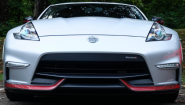
Fastest project? Yeah, maybe so. Sure does feel like it's been taking me over.