


Backpressure: The MYTH and Why It's Wrong


In V6 engines where there is more than one exhaust bank, X-pipes work on the same principle of using the low pressure component of an exhaust pulse from one bank to increase the velocity of the next exhaust pulse from the other. Linking the two banks of the engine in this way more closely times the exhaust pulses increasing velocity and VE.

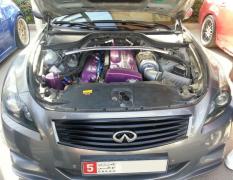

The write-up refers to any and all backpressure on the exhaust side of the engine. Although it doesn't specifically mention turbo manifolds, it is directly applicable. Why do you think Log manifolds typically underperform vs tubular manifolds, which typically underperform vs equal length manifolds, which will typically underperform vs a divided equal length manifold? Backpressure is backpressure, regardless of if there is a turbo in the exhaust system or not. Nowhere in the article does it mention a catback exhaust. It does, however, go down to the pulse level, which would originate directly out of the engine and into the collector.
Do you have any experience at all with serious modifications and the physics/theory behind them? Every post you make just makes you lose credibility; bolt-ons do not count.
Do you have any experience at all with serious modifications and the physics/theory behind them? Every post you make just makes you lose credibility; bolt-ons do not count.
I dont think there's a need to question anyone's credibility. I'm one of the very few people that installed a TT kit on the G37. I wouldnt count that as a bolt-on. I've done extensive research on the topic.
If you expect all comments to be "oh mike you're so great", and bark at anyone that challenges your ideas, then I think it's time to grow up.

Registered User
Joined: Oct 2007
Posts: 1,381
Likes: 2
From: Ponte Vedra, FL
In V6 engines where there is more than one exhaust bank, X-pipes work on the same principle of using the low pressure component of an exhaust pulse from one bank to increase the velocity of the next exhaust pulse from the other. Linking the two banks of the engine in this way more closely times the exhaust pulses increasing velocity and VE.
OP, great post. I agree that back pressure is often misunderstood/misused.


Z06 with Exhaust
YouTube - 2008 Corvette Z06 with Corsa Exhaust and CAI - Auto Addiction ltd
Z06 with Exhaust and X-pipe
YouTube - 2008 Corvette Z06 With Corsa Mufflers and X Pipe By Serious Autosport
Note how the first clip has that typical "beefy american muscle" sound, while the second one doesn't.

I dont know much about exhaust, and your write up gives a good idea of how it works. thanks for the write up.
question: Several people after changing exhaust components such as HFCs or full catbacks sometimes develop the hissing sound on deceleration around the cat converter area. is the sound due to pressure and velocity? is air flowing reverse and back into the engine?
question: Several people after changing exhaust components such as HFCs or full catbacks sometimes develop the hissing sound on deceleration around the cat converter area. is the sound due to pressure and velocity? is air flowing reverse and back into the engine?

Awesome. Love technical stuff like this. Thanks.
__________________
Best Car Insurance | Auto Protection Today | FREE Trade-In Quote
__________________
Best Car Insurance | Auto Protection Today | FREE Trade-In Quote

If you're here to learn, check out these articles:
!Header Basics
Tuning the LET - Exhaust
The truth about exhaust backpressure and torque
This is neat in that it shows how important each and every part is in an engine. It's about collectors but still applies somewhat to the discussion at hand. If nothing else, read the last paragraph on this one:
http://www.jgenginedynamics.com/Adob...collectors.pdf
I'm still looking for a specific one that I can not find right now.
!Header Basics
Tuning the LET - Exhaust
The truth about exhaust backpressure and torque
This is neat in that it shows how important each and every part is in an engine. It's about collectors but still applies somewhat to the discussion at hand. If nothing else, read the last paragraph on this one:
http://www.jgenginedynamics.com/Adob...collectors.pdf
I'm still looking for a specific one that I can not find right now.