


got a tune finally!




Not sure why they would do the baseline pulls in 3rd. You might ask your tuner about that but power pulls are usually done in whatever gear has a 1:1 ratio (1 input shaft revolution produces 1 output shaft revolution). In the case of the 5AT, this is 4th but in the 7AT, it's 5th.

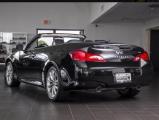
I feel everybody that wants to see 300+ on the hp dyno. But Vizard_87 has a real point here. I don't know what my car puts out yet but I have nearly the same mods and THEY DEF make a difference in the experience of driving. They make an already fast car into a beast. I can't wait to experiment with some Forced induction on my next ride. But for now I'm perfectly happy with what the car puts out and I still have the headers and the exhaust install to look forward to. Just saying.


info about dynos / why they used 3 & 4 gear.
Dynos.. Mustang, DynoJet and Dynapack - Scion FR-S Forum | Subaru BRZ Forum | Toyota 86 GT 86 Forum | AS1 Forum - FT86CLUB
Dynos.. Mustang, DynoJet and Dynapack - Scion FR-S Forum | Subaru BRZ Forum | Toyota 86 GT 86 Forum | AS1 Forum - FT86CLUB
info about dynos / why they used 3 & 4 gear.
Dynos.. Mustang, DynoJet and Dynapack - Scion FR-S Forum | Subaru BRZ Forum | Toyota 86 GT 86 Forum | AS1 Forum - FT86CLUB
Dynos.. Mustang, DynoJet and Dynapack - Scion FR-S Forum | Subaru BRZ Forum | Toyota 86 GT 86 Forum | AS1 Forum - FT86CLUB

Smells pretty fishy to me to do baseline pulls on 3rd gear and do the after (tuned) pulls in 4th, doing pulls in different gears is obviously going to yield different results.
Yea still not completely clear on that. From the article above for the dyno I used it did make it sound like the initial 3rd gear pull was just to calibrate the dyno

I usually try to stay out of these sort of discussions, but here is my input...
The part of the graph that the cursor is on, draws a vertical line, and 'pops up' whatever the WHP reading is at that point. So at that specific RPM, you were at 267WHP. That does not represent the peak numbers. It looks like all of your gains are between the 4.5K-6.5K range. That's great! It must feel like a totally different car. When you make improvements in the midrange, you can sometimes improve as much as 40-50lb/ft, and the car totally feels like a beast, but the peak number stays the same. That's what dynos are good for - as a detailed analysis tool. And midrange gains are the most valuable, even though they're the hardest to sell. Unless you're really burying the gas pedal, most people shift way before redline. They just want to feel the 'swell'. If that happens sooner, they'll find themselves shifting sooner. (That helps with engine longevity.)
As for what gear the car was dyno'd in - it doesn't matter. As long as the car is loaded up correctly in the database, the dyno computer will make all the necessary calculations and output a number. On an accurate dyno, you can dyno in first and get the same reading as running it in 6th. The problems with running in 1st is traction, you'll get wheelspin, and also because the RPM's will rev so quickly that you essentially have very low resolution in the analysis. The opposite is the case if you ran in 6th, and ran your car up to 200 on the dyno. First it would be dangerous to get the car/rollers up to that speed, BUT you would have incredibly detailed resolution because the pull would take forever, so you'd be logging tons of data points for 3,500rpm, 3,550rpm, 3,55rpm, etc. So that's a good thing, but if there's a problem like knock at a certain RPM, you'd be at max load and knocking like crazy for a long time until the motor got past that engine speed. You'd blow a lot of motors dynoing in 6th. So a compromise is to use 3rd or 4th. Speed is kept to a reasonable level, and you get a nice balance of resolution, and not staying at a (bad) RPM for to long.
So to answer your specific question of why it was baseline'd in 3rd, and tuned in 4th, it's because they aren't doing any tuning to get the baseline, so just run it, and grab a number that the tuner can reference. If it's an accurate dyno, and it was run more than once to show consistency, then it's a trustworthy number. THEN when it's time to tune, run it in 4th to get a little higher resolution so you can get the tune more detailed. After the tune was made, if the tuner wanted to, the tuner could run a 'hero number' in 3rd just to brag about how much power the tune made under the same conditions, but again, if it's an accurate dyno (and most tuners trust their dynos to be accurate), then it's not necessary. Your numbers are real numbers, and your gains are real. If you like it, you got your money's worth! Try not to get too caught up in peak numbers when the dyno is showing a lot more than that.
The part of the graph that the cursor is on, draws a vertical line, and 'pops up' whatever the WHP reading is at that point. So at that specific RPM, you were at 267WHP. That does not represent the peak numbers. It looks like all of your gains are between the 4.5K-6.5K range. That's great! It must feel like a totally different car. When you make improvements in the midrange, you can sometimes improve as much as 40-50lb/ft, and the car totally feels like a beast, but the peak number stays the same. That's what dynos are good for - as a detailed analysis tool. And midrange gains are the most valuable, even though they're the hardest to sell. Unless you're really burying the gas pedal, most people shift way before redline. They just want to feel the 'swell'. If that happens sooner, they'll find themselves shifting sooner. (That helps with engine longevity.)
As for what gear the car was dyno'd in - it doesn't matter. As long as the car is loaded up correctly in the database, the dyno computer will make all the necessary calculations and output a number. On an accurate dyno, you can dyno in first and get the same reading as running it in 6th. The problems with running in 1st is traction, you'll get wheelspin, and also because the RPM's will rev so quickly that you essentially have very low resolution in the analysis. The opposite is the case if you ran in 6th, and ran your car up to 200 on the dyno. First it would be dangerous to get the car/rollers up to that speed, BUT you would have incredibly detailed resolution because the pull would take forever, so you'd be logging tons of data points for 3,500rpm, 3,550rpm, 3,55rpm, etc. So that's a good thing, but if there's a problem like knock at a certain RPM, you'd be at max load and knocking like crazy for a long time until the motor got past that engine speed. You'd blow a lot of motors dynoing in 6th. So a compromise is to use 3rd or 4th. Speed is kept to a reasonable level, and you get a nice balance of resolution, and not staying at a (bad) RPM for to long.
So to answer your specific question of why it was baseline'd in 3rd, and tuned in 4th, it's because they aren't doing any tuning to get the baseline, so just run it, and grab a number that the tuner can reference. If it's an accurate dyno, and it was run more than once to show consistency, then it's a trustworthy number. THEN when it's time to tune, run it in 4th to get a little higher resolution so you can get the tune more detailed. After the tune was made, if the tuner wanted to, the tuner could run a 'hero number' in 3rd just to brag about how much power the tune made under the same conditions, but again, if it's an accurate dyno (and most tuners trust their dynos to be accurate), then it's not necessary. Your numbers are real numbers, and your gains are real. If you like it, you got your money's worth! Try not to get too caught up in peak numbers when the dyno is showing a lot more than that.



I usually try to stay out of these sort of discussions, but here is my input...
The part of the graph that the cursor is on, draws a vertical line, and 'pops up' whatever the WHP reading is at that point. So at that specific RPM, you were at 267WHP. That does not represent the peak numbers. It looks like all of your gains are between the 4.5K-6.5K range. That's great! It must feel like a totally different car. When you make improvements in the midrange, you can sometimes improve as much as 40-50lb/ft, and the car totally feels like a beast, but the peak number stays the same. That's what dynos are good for - as a detailed analysis tool. And midrange gains are the most valuable, even though they're the hardest to sell. Unless you're really burying the gas pedal, most people shift way before redline. They just want to feel the 'swell'. If that happens sooner, they'll find themselves shifting sooner. (That helps with engine longevity.)
As for what gear the car was dyno'd in - it doesn't matter. As long as the car is loaded up correctly in the database, the dyno computer will make all the necessary calculations and output a number. On an accurate dyno, you can dyno in first and get the same reading as running it in 6th. The problems with running in 1st is traction, you'll get wheelspin, and also because the RPM's will rev so quickly that you essentially have very low resolution in the analysis. The opposite is the case if you ran in 6th, and ran your car up to 200 on the dyno. First it would be dangerous to get the car/rollers up to that speed, BUT you would have incredibly detailed resolution because the pull would take forever, so you'd be logging tons of data points for 3,500rpm, 3,550rpm, 3,55rpm, etc. So that's a good thing, but if there's a problem like knock at a certain RPM, you'd be at max load and knocking like crazy for a long time until the motor got past that engine speed. You'd blow a lot of motors dynoing in 6th. So a compromise is to use 3rd or 4th. Speed is kept to a reasonable level, and you get a nice balance of resolution, and not staying at a (bad) RPM for to long.
So to answer your specific question of why it was baseline'd in 3rd, and tuned in 4th, it's because they aren't doing any tuning to get the baseline, so just run it, and grab a number that the tuner can reference. If it's an accurate dyno, and it was run more than once to show consistency, then it's a trustworthy number. THEN when it's time to tune, run it in 4th to get a little higher resolution so you can get the tune more detailed. After the tune was made, if the tuner wanted to, the tuner could run a 'hero number' in 3rd just to brag about how much power the tune made under the same conditions, but again, if it's an accurate dyno (and most tuners trust their dynos to be accurate), then it's not necessary. Your numbers are real numbers, and your gains are real. If you like it, you got your money's worth! Try not to get too caught up in peak numbers when the dyno is showing a lot more than that.
The part of the graph that the cursor is on, draws a vertical line, and 'pops up' whatever the WHP reading is at that point. So at that specific RPM, you were at 267WHP. That does not represent the peak numbers. It looks like all of your gains are between the 4.5K-6.5K range. That's great! It must feel like a totally different car. When you make improvements in the midrange, you can sometimes improve as much as 40-50lb/ft, and the car totally feels like a beast, but the peak number stays the same. That's what dynos are good for - as a detailed analysis tool. And midrange gains are the most valuable, even though they're the hardest to sell. Unless you're really burying the gas pedal, most people shift way before redline. They just want to feel the 'swell'. If that happens sooner, they'll find themselves shifting sooner. (That helps with engine longevity.)
As for what gear the car was dyno'd in - it doesn't matter. As long as the car is loaded up correctly in the database, the dyno computer will make all the necessary calculations and output a number. On an accurate dyno, you can dyno in first and get the same reading as running it in 6th. The problems with running in 1st is traction, you'll get wheelspin, and also because the RPM's will rev so quickly that you essentially have very low resolution in the analysis. The opposite is the case if you ran in 6th, and ran your car up to 200 on the dyno. First it would be dangerous to get the car/rollers up to that speed, BUT you would have incredibly detailed resolution because the pull would take forever, so you'd be logging tons of data points for 3,500rpm, 3,550rpm, 3,55rpm, etc. So that's a good thing, but if there's a problem like knock at a certain RPM, you'd be at max load and knocking like crazy for a long time until the motor got past that engine speed. You'd blow a lot of motors dynoing in 6th. So a compromise is to use 3rd or 4th. Speed is kept to a reasonable level, and you get a nice balance of resolution, and not staying at a (bad) RPM for to long.
So to answer your specific question of why it was baseline'd in 3rd, and tuned in 4th, it's because they aren't doing any tuning to get the baseline, so just run it, and grab a number that the tuner can reference. If it's an accurate dyno, and it was run more than once to show consistency, then it's a trustworthy number. THEN when it's time to tune, run it in 4th to get a little higher resolution so you can get the tune more detailed. After the tune was made, if the tuner wanted to, the tuner could run a 'hero number' in 3rd just to brag about how much power the tune made under the same conditions, but again, if it's an accurate dyno (and most tuners trust their dynos to be accurate), then it's not necessary. Your numbers are real numbers, and your gains are real. If you like it, you got your money's worth! Try not to get too caught up in peak numbers when the dyno is showing a lot more than that.


Yea no problem. I'm thoroughly impressed and excited about the way it turned out. I wouldn't change a thing about my mods or my tune at this point. And yea, it's a blast to drive and a beast to keep under control.

Registered Member
Joined: Sep 2013
Posts: 710
Likes: 68
From: Las Vegas
Nice. Congrats on the tune. I'm sure Specialty_Z did a great job. They are very good at what they do.
Funny that Seb told you to switch from Chevron to Shell. I have been a die hard Chevron guy myself for years. But I feel like the last couple tank full the engine hasn't been running at it's prime levels.
So this last full tank I switched to Shell V-Power. And I don't know if it's psychosomatic, but the car feels like a beast again.
So who knows, I will stick with Shell for a while now.
And once again, congrats on the tune man.
Funny that Seb told you to switch from Chevron to Shell. I have been a die hard Chevron guy myself for years. But I feel like the last couple tank full the engine hasn't been running at it's prime levels.
So this last full tank I switched to Shell V-Power. And I don't know if it's psychosomatic, but the car feels like a beast again.
So who knows, I will stick with Shell for a while now.
And once again, congrats on the tune man.
Nice. Congrats on the tune. I'm sure Specialty_Z did a great job. They are very good at what they do.
Funny that Seb told you to switch from Chevron to Shell. I have been a die hard Chevron guy myself for years. But I feel like the last couple tank full the engine hasn't been running at it's prime levels.
So this last full tank I switched to Shell V-Power. And I don't know if it's psychosomatic, but the car feels like a beast again.
So who knows, I will stick with Shell for a while now.
And once again, congrats on the tune man.
Funny that Seb told you to switch from Chevron to Shell. I have been a die hard Chevron guy myself for years. But I feel like the last couple tank full the engine hasn't been running at it's prime levels.
So this last full tank I switched to Shell V-Power. And I don't know if it's psychosomatic, but the car feels like a beast again.
So who knows, I will stick with Shell for a while now.
And once again, congrats on the tune man.

Thread
Thread Starter
Forum
Replies
Last Post
Tuckermaclain
G37 Sedan
59
Oct 5, 2015 11:41 PM
parkern
G37 Sedan
22
Oct 5, 2015 12:12 PM

